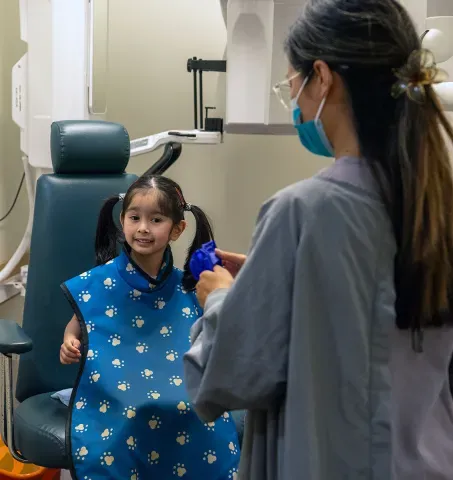
Fluoride treatment is a quick, simple preventive step that helps strengthen enamel and lower your child’s risk of cavities. Professional fluoride is most often a varnish painted onto the teeth in a few minutes, and at our Kahala Mall office in Honolulu it can usually be done during a regular checkup. The CDC reports that fluoride varnish can prevent about one-third of cavities in baby teeth. Uchida Pediatric Dentistry recommends fluoride based on each child’s age, cavity history, diet and brushing habits.
Is Fluoride Safe for Children?
Yes. HealthyChildren.org from the American Academy of Pediatrics (AAP) explains that fluoride varnish is safe and used by dentists and doctors around the world to help prevent tooth decay in children. Only a small amount is used, hardly any is swallowed, and it hardens quickly once it touches saliva. It doesn’t hurt, and most children like the taste. Some brands can make teeth look a little yellow or dull until the varnish is brushed off.
After treatment, the AAP’s guidance is that your child can eat and drink right away, but stick to soft foods and drinks that are cold or warm, not hot. Wait at least 4 to 6 hours before brushing or flossing, or until the next morning if your dentist says so. The dentist will give you clear instructions before you leave.
Who May Benefit
The AAP notes that fluoride varnish can be applied 2 to 4 times a year, depending on how likely a child is to get cavities, and that it can be started once a child has a tooth. Children who may benefit most include:
- Babies and toddlers with new teeth, starting at the first visit
- Children with early enamel weakness, white spots or frequent cavities
- Children who are still learning consistent brushing habits
- Children with orthodontic appliances or hard-to-clean areas
- Families looking for stronger preventive care between visits
For babies, fluoride advice starts at the infant oral health exam. For more on how fluoride works and how much toothpaste to use at each age, read our parent guide to fluoride treatments for kids.
Related Preventive Care
Fluoride works best as part of a full prevention plan. The AAP reminds parents that varnish can’t prevent every cavity on its own; it works best alongside brushing with the right amount of fluoride toothpaste, regular dental care and a healthy diet. That plan may include routine cleanings and exams, dental sealants, and nutrition and oral hygiene guidance.
To schedule fluoride treatment for your keiki, call (808) 739-0878 or contact our office at Kahala Mall, 4211 Waialae Ave, Suite 3070, Honolulu, with free parking.
Sources: HealthyChildren.org (AAP): Fluoride Varnish: What Parents Need to Know; CDC: Oral Health Tips for Children.
Preparing for the visit
Parents considering fluoride treatment can ask how fluoride fits into their child’s overall prevention plan, including toothpaste use, drinking water, diet, and cavity history. The dental team can explain the recommended option and answer questions before treatment. Fluoride recommendations are individualized rather than based on age alone, and may consider dental development, enamel, past cavities, home habits, and other sources of fluoride. Please share relevant health updates and let the office know about any previous reactions or concerns so the visit can be planned appropriately. Parents can also ask what to expect after treatment and when normal eating, drinking, brushing, and flossing routines can resume.
After the appointment
Before leaving, parents can ask the dentist to summarize the findings, home-care steps, and recommended timing for the next visit. Follow the individualized instructions provided for the child, including any guidance about eating, drinking, brushing, flossing, discomfort, or activity. Keep the office phone number available and call if a new symptom appears or if something about the recovery or daily routine is unclear. Ongoing preventive visits give the dental team an opportunity to monitor development, review habits, and adjust recommendations as the child grows.