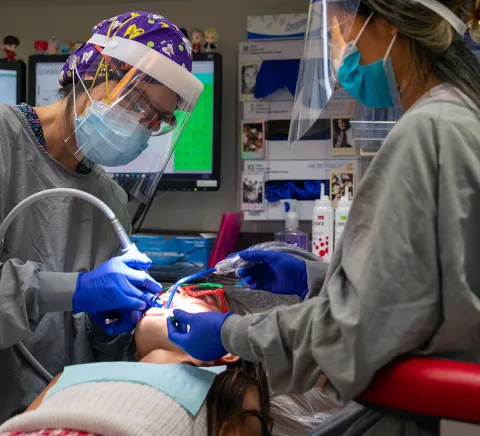
Dental sealants are thin protective coatings placed on the chewing surfaces of back teeth. They help protect deep grooves where food and plaque can collect, especially while children are still developing strong brushing skills.
How Sealants Help
Sealants do not replace brushing, flossing, or regular dental visits, but they can add meaningful protection for cavity-prone molars. The process is quick, comfortable, and does not require numbing.
When Sealants Are Recommended
- When permanent molars come in
- When tooth grooves are deep or hard to clean
- When a child has a higher risk of cavities
- When the pediatric dentist sees a preventive benefit
Keep Prevention Consistent
Sealants are often discussed during routine dental exams and may be paired with fluoride treatment for a stronger cavity-prevention plan.
Preparing for the visit
A sealant conversation starts with an examination of the child’s teeth and cavity risk. Parents can ask which teeth may benefit, what the application involves, and how sealants are checked at future visits. Sealants are generally considered for the grooves of back teeth, but the dentist first evaluates whether the tooth is ready and whether another approach is more appropriate. Regular brushing, flossing, balanced snacks, and scheduled dental visits remain important because sealants do not replace daily home care. The office can also discuss comfort needs or questions before the appointment so children know what to expect. At later checkups, the dental team can evaluate how the sealants are holding up.
After the appointment
Before leaving, parents can ask the dentist to summarize the findings, home-care steps, and recommended timing for the next visit. Follow the individualized instructions provided for the child, including any guidance about eating, drinking, brushing, flossing, discomfort, or activity. Keep the office phone number available and call if a new symptom appears or if something about the recovery or daily routine is unclear. Ongoing preventive visits give the dental team an opportunity to monitor development, review habits, and adjust recommendations as the child grows.