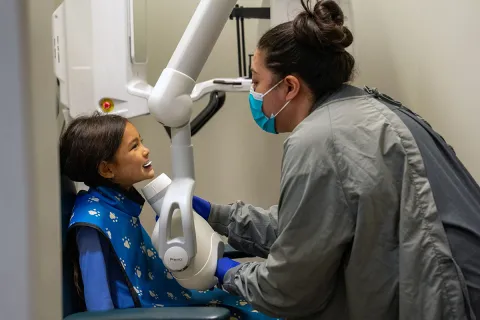
Pediatric dental X-rays help the dentist see areas that are not visible during a visual exam, including between teeth and below the gumline. Uchida Pediatric Dentistry recommends X-rays only when they are useful for diagnosis, growth monitoring, or treatment planning.
Why X-Rays May Be Recommended
- To check for cavities between teeth
- To monitor developing permanent teeth
- To evaluate dental injuries or tooth pain
- To plan treatment safely and accurately
Parent-Friendly Safety Approach
The team uses a thoughtful, child-centered approach and explains why images are recommended. Frequency depends on the child’s age, oral health, cavity risk, and clinical needs.
Connected Care
X-rays may be part of a routine exam, an emergency dental visit, or evaluation for pediatric dental fillings.
Preparing for the visit
Dental X-rays are considered according to a child’s age, dental development, examination findings, history, and current needs. Parents are welcome to ask why an image is recommended and how it will help the dentist evaluate the child’s teeth. Images may help the dentist see areas that are not visible during an examination, monitor development, or evaluate a specific symptom. The type and timing of any image depends on the individual child rather than a one-size-fits-all schedule. Tell the team about recent X-rays from another office so records can be reviewed when available, and share any questions before images are taken. The office can also explain the equipment and steps used during the visit.
After the appointment
Before leaving, parents can ask the dentist to summarize the findings, home-care steps, and recommended timing for the next visit. Follow the individualized instructions provided for the child, including any guidance about eating, drinking, brushing, flossing, discomfort, or activity. Keep the office phone number available and call if a new symptom appears or if something about the recovery or daily routine is unclear. Ongoing preventive visits give the dental team an opportunity to monitor development, review habits, and adjust recommendations as the child grows.